Polyurea floor coatings · Desert Ridge
The elastic foundation under demanding floors.
Tenacious grip, built-in stretch and shock absorption make polyurea our foundation layer for punishing spaces.
- Role
- Base layer
- Strength
- Elasticity & bond
- Paired with
- Polyaspartic topcoat
- Typical timeline
- 1–2 days
Material overview
Polyurea is a fast-reacting elastomer known from spray-applied truck bed liners and industrial tank linings. It bonds strongly to prepared substrates and can stretch considerably before failing. Floor-grade polyureas are formulated for roller and squeegee application on ground concrete, bringing that toughness to garages and service spaces.
In a floor system, polyurea functions as the base coat. It penetrates the opened surface, grips firmly and remains slightly elastic once cured. A decorative flake or pigmented layer and a UV-stable polyaspartic topcoat complete the system.
Why elasticity matters
Concrete expands and contracts with temperature and can move slightly as soils settle. A rigid coating must follow those movements, and over many cycles it can crack along joints or lose adhesion at edges. An elastic base accommodates part of that movement, reducing stress on the layers above. It also absorbs impacts — dropped tools, jack handles, equipment — that might chip a brittle film.
Where we specify polyurea
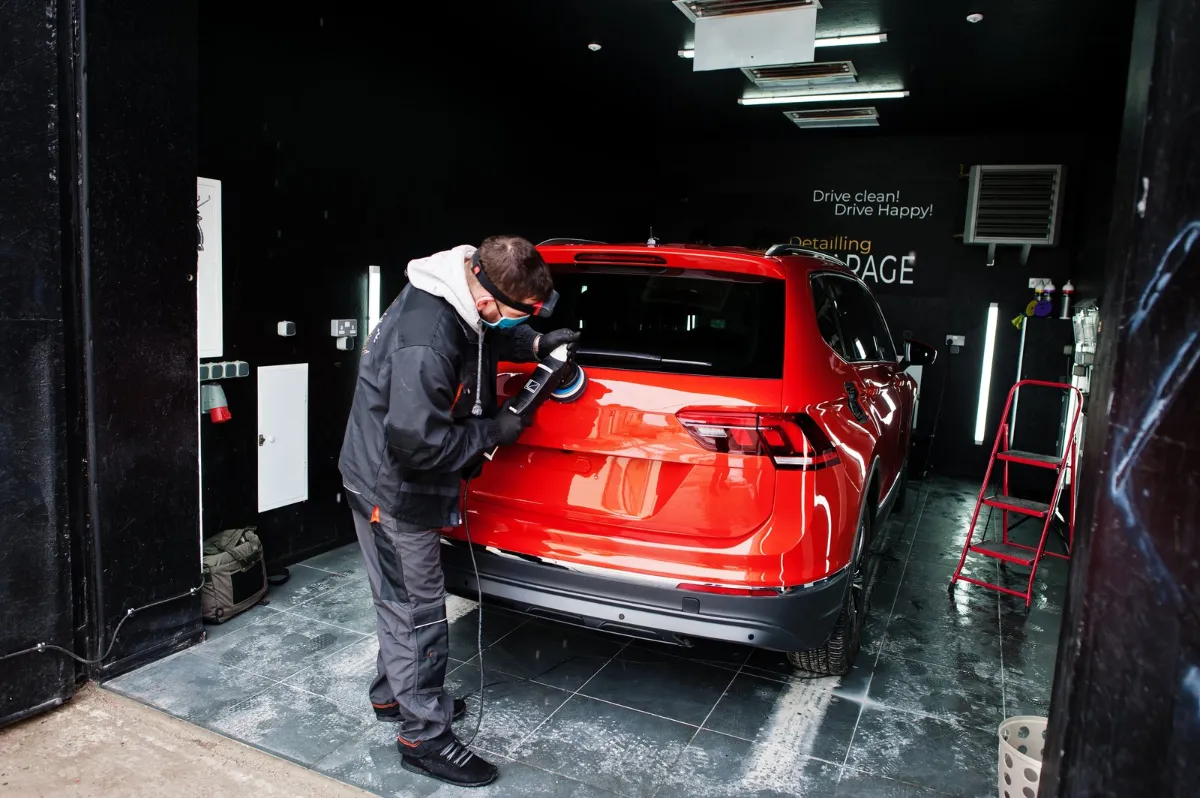
- Detailing studios
- Constant water, chemicals and rolling carts demand a tough, well-bonded base.
- Workshop garages
- Impacts from tools and equipment are absorbed rather than transmitted.
- Service bays
- Jacks, stands and heavy vehicles concentrate load and torsion.
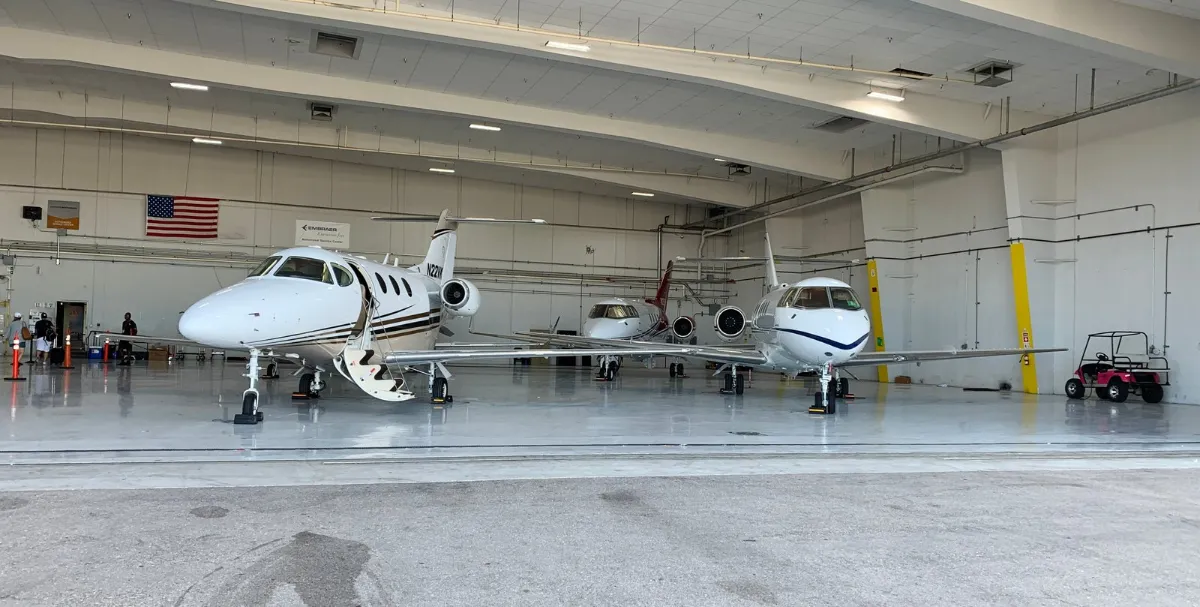
- Hangars and storage
- Large, often uninsulated buildings with significant temperature swings.
- Slabs with hairline cracking
- Existing movement suggests a flexible base will perform better long term.
Key advantages
High bond strength
Grips deeply into properly prepared concrete.
Elastic
Accommodates thermal movement and minor settling.
Impact-absorbing
Resists chipping from dropped tools and equipment.
Fast cure
Gets the room back in service sooner, particularly under a polyaspartic finish.
System configurations
- Polyurea + flake + polyaspartic
- Durable, decorative and UV-stable — the most common residential configuration.
- Pigmented polyurea + clear top
- A solid, light-reflective floor for studios and service areas.
- Heavy-duty build
- Additional thickness and aggregate for high-impact zones.
- Textured wash finish
- Coarse aggregate for areas where water and soap are constant.
Installation
- 01
Assess movement
We study crack patterns, joints and slab history.
- 02
Grind to profile
Polyurea needs a clean, open surface; grinding is thorough.
- 03
Treat joints
Static cracks are filled; working joints receive appropriate fillers.
- 04
Apply base
Small, timed batches; flake or pigment added immediately.
- 05
Topcoat
Polyaspartic or urethane top for UV and chemical resistance.
Handling fast-reacting materials
Polyurea reacts quickly and is intolerant of contamination or moisture on the slab. Mix ratios must be exact and application immediate. Not every product labeled polyurea is designed for roller application on floors; some are spray-only. Our crews use floor-specific formulations and size batches to the area and crew so the base goes down evenly.
Local applications
Desert Ridge and the surrounding commercial corridors include detailing studios, auto service businesses and light-industrial buildings toward Deer Valley. Many residential garages double as workshops or house heavy EVs and trucks. In each of these settings, a polyurea base provides a margin of resilience that standard epoxy bases lack.
Summer heat in uninsulated buildings is significant, and slabs in those spaces move more than air-conditioned floors. A flexible base helps coatings ride through those cycles.
Detailing studios: a special case
Automotive detailing and paint-protection studios have become common in north Phoenix, and their floors face an unusual combination of conditions. Water is used constantly, along with soaps, degreasers, iron removers, clay lubricants and polishing compounds. Rolling carts, creepers and lifts move across the floor all day. And the studio itself is a showroom: clients judge the business partly by how clean and bright the space looks.
A polyurea base handles the moisture and chemical exposure well, and its elasticity resists chipping from dropped tools. Paired with a bright pigmented layer and a chemical-resistant topcoat, it produces a floor that reflects light onto vehicle paint — useful for spotting defects — and cleans up quickly at the end of the day.
Home workshops and multi-use garages
Not every demanding floor is commercial. Many Desert Ridge homeowners use part of the garage as a workshop for woodworking, car projects, cycling maintenance or hobbies. These spaces see dropped tools, rolling toolboxes, jack stands and occasional spills of solvent or lubricant.
A polyurea base gives the coating more tolerance for those knocks than a rigid epoxy. In mixed-use garages we sometimes specify polyurea only in the workshop zone and a standard system in the parking bays, keeping costs reasonable while putting resilience where it’s needed.
Polyurea, epoxy and polyaspartic in context
The three chemistries are often discussed as alternatives, but in practice they’re complementary. Epoxy is rigid, inexpensive per mil and an excellent bonder, though it ambers in sunlight. Polyurea is elastic and fast-curing, ideal as a base where movement or impact is expected. Polyaspartic, a slower relative of polyurea, is UV-stable and abrasion-resistant, making it the preferred topcoat. The right system often uses two of them, chosen for the specific conditions of the floor.
Signs a flexible base is worth it
Certain clues suggest a polyurea base will outperform a standard epoxy base over the long term.
- Hairline cracks that have appeared over time across the slab
- Chipped or crumbling control-joint edges
- A detached or uninsulated building
- Frequent impacts from tools or equipment
- Heavy vehicles, lifts or jack stands used regularly
Cost and value
Polyurea materials cost more than epoxy, and their fast reaction requires a well-coordinated crew. A cooled, steady garage with modest use is generally well served by a less costly epoxy base. For a detailing studio, service bay, workshop or uninsulated building, the added resilience of polyurea typically pays for itself by avoiding premature repairs. We present both options so the decision is clear.
Detached garages and casitas-in-progress
Some properties include detached garages, RV ports or accessory buildings that aren’t air-conditioned. Inside, summer temperatures can climb well above outdoor readings, causing slabs to expand and contract more than those in conditioned spaces. Stiff coatings in such buildings tend, sooner or later, to split along joints and peel at the thresholds. A polyurea base is designed for these conditions and gives the floor a better chance of lasting.
What to expect at the consultation
We’ll look closely at the concrete — crack patterns, joint edges, any existing coatings — and take moisture readings. We’ll also ask how the space is used: vehicles, equipment, hobbies, washing. That information determines whether polyurea’s extra resilience is worthwhile or whether a standard base will perform just as well. The recommendation and reasoning are documented in the proposal.
Care for high-use floors
Workshops and studios generate more debris than parking garages, so regular sweeping matters. Clean chemical spills promptly, especially solvents. Spread long-term point loads on plywood sheets, and lay a welding blanket wherever sparks will fly. With those habits, a polyurea-based system holds up for years in demanding conditions.
Polyurea in commercial service spaces
Tire shops, quick-lube centers, motorcycle dealers and equipment rental businesses all combine heavy loads, fluids and constant traffic. A polyurea base with a chemical-resistant topcoat stands up to that combination, and bright pigmented finishes make bays look professional to customers who can see into the shop.
How long a polyurea system lasts
Service life depends on preparation, total film thickness, traffic and maintenance. In residential garages and workshops, a well-installed polyurea-based system typically lasts many years before the topcoat needs refreshing. In commercial service bays, periodic topcoat maintenance extends life significantly. Because the base remains elastic and bonded, recoating is usually straightforward: the existing topcoat is abraded and a new one applied.
Frequently asked
How is polyurea different from polyaspartic?
Polyaspartic belongs to the same family but cures more gently and shrugs off sunlight. Our usual stack puts polyurea underneath and polyaspartic on the surface.
Will it stop cracks?
It accommodates minor movement, but cracks caused by ongoing soil movement may still appear.
Is it more expensive than epoxy?
Yes, typically. We’ll compare both options and explain where the extra cost is worthwhile.
Is it suitable for detailing studios?
Very much so — it handles water, chemicals and rolling equipment well.
Can polyurea be used under metallic finishes?
Metallic finishes are typically built on epoxy, which flows and levels more slowly. Polyurea is better suited to flake and pigmented systems.
Does polyurea need a topcoat?
Yes. Left exposed, polyurea darkens in the sun, which is why it always gets a protective top layer.
Is polyurea suitable for an EV garage?
It works well, particularly where heavy vehicles turn tightly in the same spot every day.
Can polyurea be applied in summer heat?
Yes. We start early in the day, monitor slab temperature and select grades suited to warm conditions.
Does polyurea have an odor?
There is some odor during application that clears quickly with ventilation.
Can polyurea be installed over an existing coating?
Usually the old coating is ground off so polyurea can bond directly to concrete. Well-bonded epoxy can sometimes be abraded and overcoated; we test adhesion first.
Related
Continue exploring.
 Polyaspartic Floor CoatingsUV-stable, quick-return coatings for sunlit garages, porches and entries.
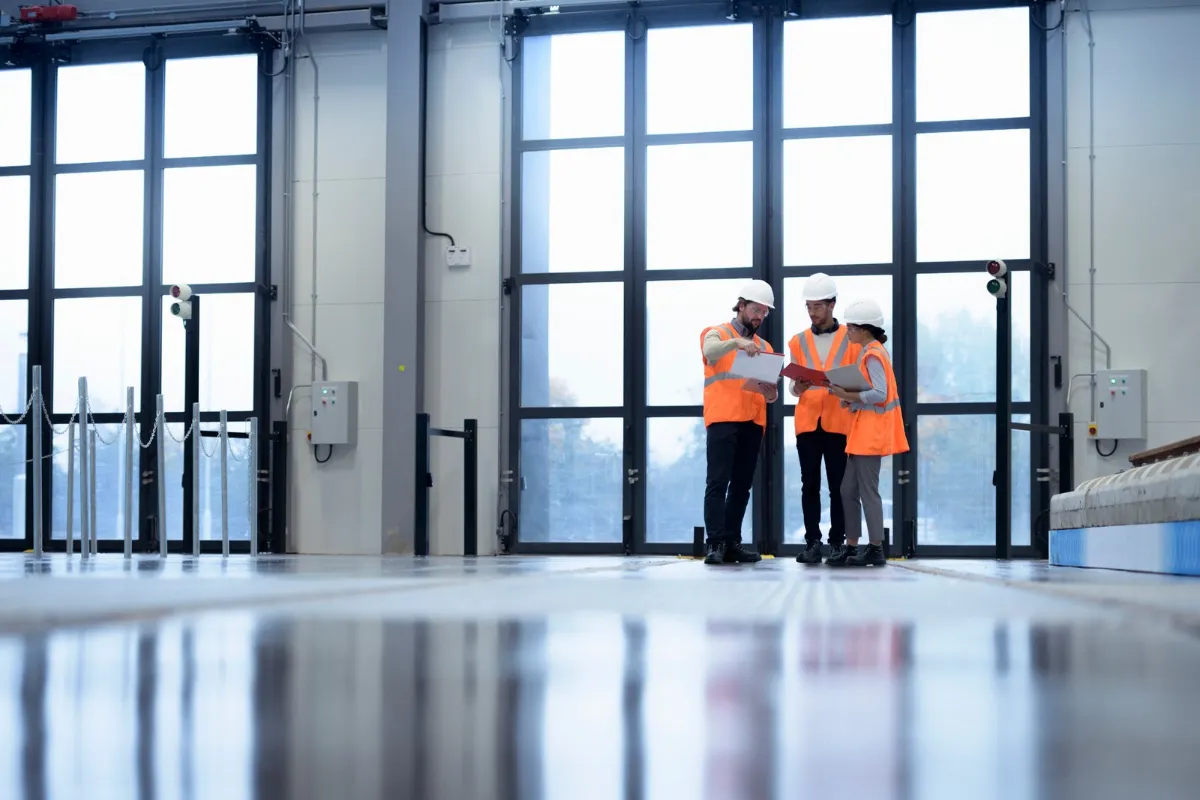 Warehouse Floor CoatingsHard-wearing systems, joint repair and line striping for logistics and service buildings.
 Garage Floor CoatingsArchitectural garage floors for daily drivers, EVs and collector cars — flake, solid or showroom finishes.
Consultation
Have a floor that takes real abuse?
We’ll assess the slab and specify a system built for it.
Call (480) 000-0000