Garage floor coatings · Desert Ridge
Garage floors with the same finish level as the house.
Flake, satin and showroom systems for everyday, EV and collector garages — installed on properly ground concrete and sealed against Arizona sun.
- Typical timeline
- 1–2 days
- Walk on
- Next morning (fast-cure)
- Finish
- Flake, satin solid or gloss
- Topcoat
- UV-stable polyaspartic
Why the garage deserves design attention
In many Desert Ridge homes the garage has quietly become a designed space. Built-in cabinetry lines the walls, slatwall organizes tools and gear, LED panels replace the single bare bulb, and an EV charger sits where a workbench used to be. Some owners keep a weekend car under a cover in the third bay. All of that investment sits on top of a floor that, in most cases, is still the raw concrete left by the builder.
Raw concrete undermines the rest of the space. It absorbs oil and coolant, shows tire tracks, collects stains under the water softener and sheds a fine gray dust that settles on cabinetry and vehicles. Even a well-organized garage looks unfinished when the floor is blotchy and porous.
A coated floor completes the room. It turns the slab into a sealed, uniform surface that can be quietly tonal, crisp and graphic or high-gloss and reflective — chosen to suit the cabinetry, the lighting and the architecture of the home.
Choosing a finish family
Garages generally fall into one of four finish directions. We’ll help you decide based on how the space is used and how it’s designed.
- Graphite or granite flake
- Full-broadcast vinyl chip in a refined blend — charcoal, slate, pearl, a hint of warm gray. The most practical everyday finish: it hides dust and tire marks and offers gentle texture underfoot.
- Satin solid
- A single tonal color — warm gray, greige, cement — with a low-sheen topcoat. Minimal and architectural, it pairs well with flat-panel cabinetry and modern doors.
- Showroom gloss
- A deep, reflective solid or micro-flake finish that mirrors overhead lighting. Ideal for collector garages and spaces designed to be seen.
- Metallic
- Pearlescent movement for climate-controlled showcase garages. Dramatic, but best reserved for spaces with limited grit and hot-tire traffic.
What every system includes
Diamond grinding
Removes the weak top layer, builder sealer and old paint so the primer bonds to sound concrete.
Feathered repairs
Cracks, spalls and pitting are filled and ground flush so they don’t telegraph through the finish.
Moisture testing
Readings determine whether a vapor-tolerant primer belongs in the system.
Multi-layer build
Primer or base, decorative layer and topcoat, each with a defined role.
UV-stable top
An aliphatic polyaspartic topcoat keeps color true where afternoon sun reaches.
Stem-wall detail
The coating returns up the short perimeter walls for a clean, finished edge.
EV garages and charging equipment
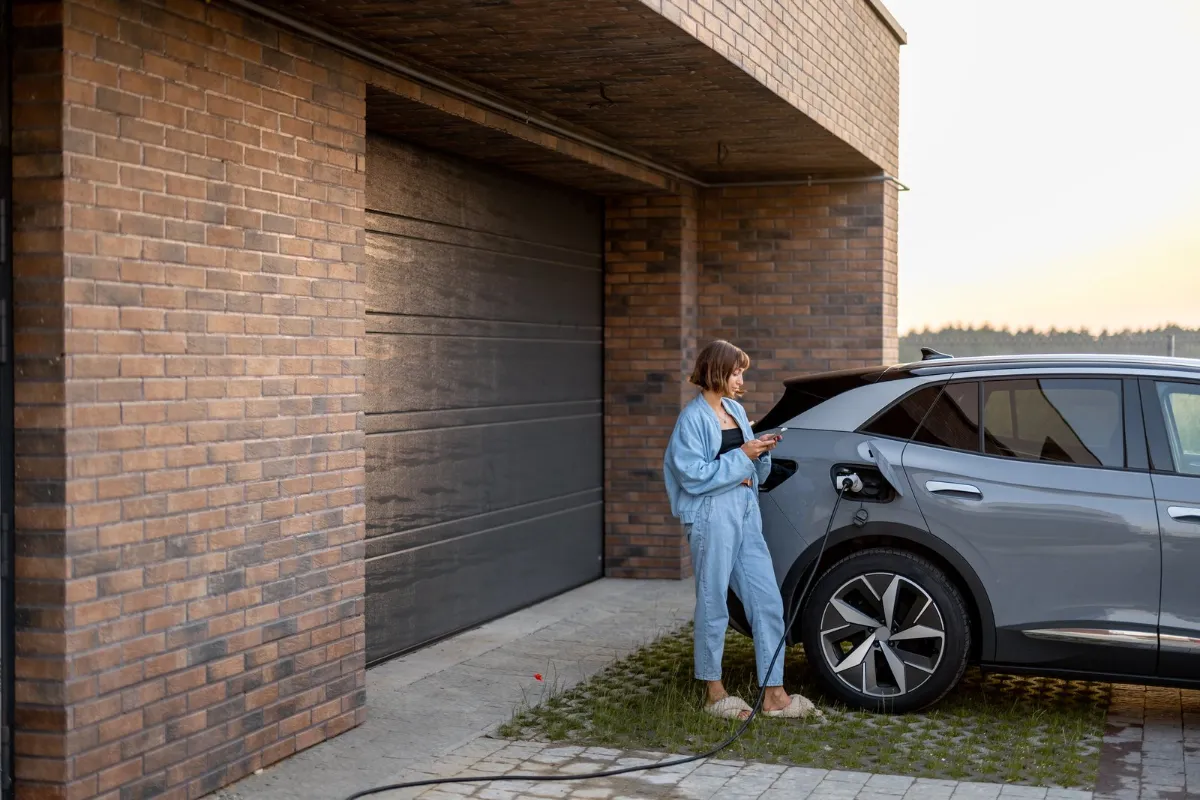
Electric vehicles have changed how garages are laid out. A wall-mounted charger or a pedestal unit becomes a fixed point that the floor has to be finished around, and the parking bay sees the same tire path every day. We coat neatly around chargers and conduit, keep coatings clear of electrical connections, and seal the edges so cleaning around the unit is easy.
EVs are heavy, and their tires carry that weight through tight turns as cars are maneuvered into position. In the bay that holds the EV, we often recommend a slightly heavier topcoat build. It adds a margin of abrasion resistance exactly where daily wear concentrates.
Collector and showcase garages
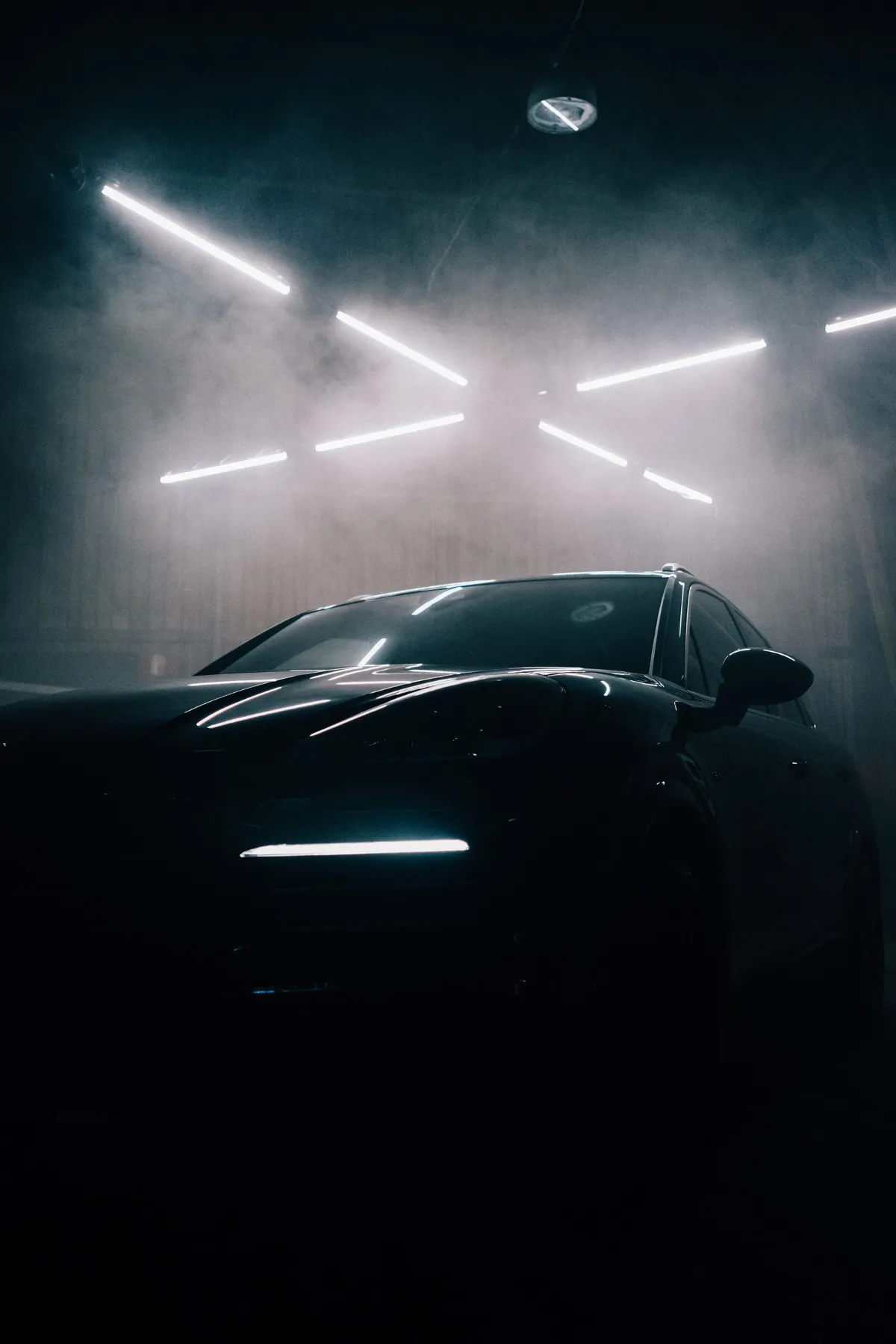
For garages built around a car collection, the floor is part of the display. High-gloss solid colors — light gray, charcoal, even crisp white — reflect lighting and make vehicles look their best. Some owners add a contrasting border, parking pads or a logo. Others choose a metallic floor for a gallery-like effect.
These finishes are less forgiving than flake, so preparation matters even more. We grind the slab flat, fill every joint and imperfection, and apply coatings in carefully timed sections to keep a consistent sheen across the entire floor. Lighting is worth planning at the same time: LED panels produce crisp reflections in gloss, while diffuse fixtures soften them.
Our installation sequence
- 01
Clear and protect
The floor is emptied and cabinetry bases, walls and the house door are masked.
- 02
Grind
Planetary diamond grinders with HEPA extraction open the surface; edges are hand-ground.
- 03
Repair
Fractures and chipped areas are patched and sanded level; control joints are finished however you prefer.
- 04
Base and design layer
A tinted base coat is applied, followed by flake broadcast, solid build or metallic work.
- 05
Topcoat
A UV-stable topcoat sets the sheen; optional grit adds traction near doors and steps.
- 06
Review
Together we inspect the result, and you leave with clear walk-on and drive-on times.
Coordinating color with cabinetry and doors
In a designed garage, the floor works alongside the cabinetry, the door and the walls. A few simple principles help. Contrast generally looks intentional: charcoal cabinets over a pale gray floor, or white cabinets over a graphite flake. Matching tones too closely can make the room feel flat. Warm cabinet finishes, like walnut or bronze, pair well with greige and warm stone blends.
The garage door is often the largest single color in the room. White and almond doors suit almost any floor; dark or wood-look doors benefit from a lighter floor that keeps the space bright. We bring sample boards to compare against your actual cabinetry and door, which is far more reliable than matching from photos.
Sheen, light and maintenance
Sheen affects both appearance and upkeep. High gloss produces crisp reflections and makes colors look deep, but it highlights dust and fine scratches. A satin top diffuses glare, masks daily scuffs and has a more tailored, architectural feel. Flake floors sit in between because the chip pattern camouflages most of what gloss would otherwise reveal.
Whatever the sheen, the same care routine applies: dust mop regularly, clean spills promptly and use a neutral cleaner for periodic mopping. In a showroom garage, a microfiber dust mop every few days keeps reflections crisp.
Desert Ridge conditions
Most homes in the area were built from the 1990s onward, many on post-tension slabs. Preparation is limited to the top skin of the concrete — no saw cuts, cores or anchors. Newer slabs are typically sound but often carry a builder sealer that must be ground off for proper adhesion.
Heat and sun are the other constants. West-facing garages can be very warm in summer, and open doors let strong light reach deep into the floor. We schedule summer work early, adjust product speeds for slab temperature and finish every garage with a UV-stable topcoat.
Professional versus kit coatings
Retail kits are thin and rely on acid etching, which barely affects dense, sealed modern slabs. The result is a coating that sits on the surface rather than bonding into it, and hot tires begin lifting it within months. Kit failures also make the next installation harder, because the failing coating has to be ground off first.
Professional systems are applied to mechanically prepared concrete, built to a meaningful thickness and finished with commercial-grade topcoats. For a garage that’s been designed with care, it’s the only approach that holds up to the investment around it.
Three-car and tandem garages
Larger garages are common in Desert Ridge, including three-car layouts and tandem bays. Big floors require careful sequencing so flake broadcast and topcoat remain consistent from one end to the other. We plan section breaks, staff the job appropriately and keep a wet edge throughout application, so the finished floor looks uniform regardless of size.
Lighting and the finished floor
New floors often prompt lighting upgrades. Linear LED panels produce crisp reflections in gloss finishes and even, shadow-free light for working. Warmer color temperatures soften the space; cooler temperatures make it feel clean and technical. If you’re planning new fixtures, install them before the floor goes in so ladders and lifts don’t scuff the fresh surface.
Frequently asked
How soon can we park after installation?
With a fast-cure polyaspartic system, foot traffic is usually fine the next morning and vehicles can return within a few days, depending on temperature.
Will a gloss garage floor be slippery?
Gloss can be slick when wet. A fine clear grit can be added to the topcoat, or a satin finish chosen, for better traction.
Can you coat around existing cabinetry?
Yes. We coat up to cabinet bases and seal the edge neatly. If cabinets sit on legs, we can coat underneath.
Do you add borders or logos?
Contrasting borders, parking pads and simple logos are possible in many systems. We’ll discuss options during the consultation.
What about the area under the water softener?
We coat carefully around fixed equipment. Where it can be safely moved briefly, coating underneath gives the cleanest result.
Can the floor be coated in phases?
Yes, though a single installation gives the most uniform result. If phasing is necessary, we plan seams at logical breaks.
Related
Continue exploring.
 Polyaspartic Floor CoatingsUV-stable, quick-return coatings for sunlit garages, porches and entries.
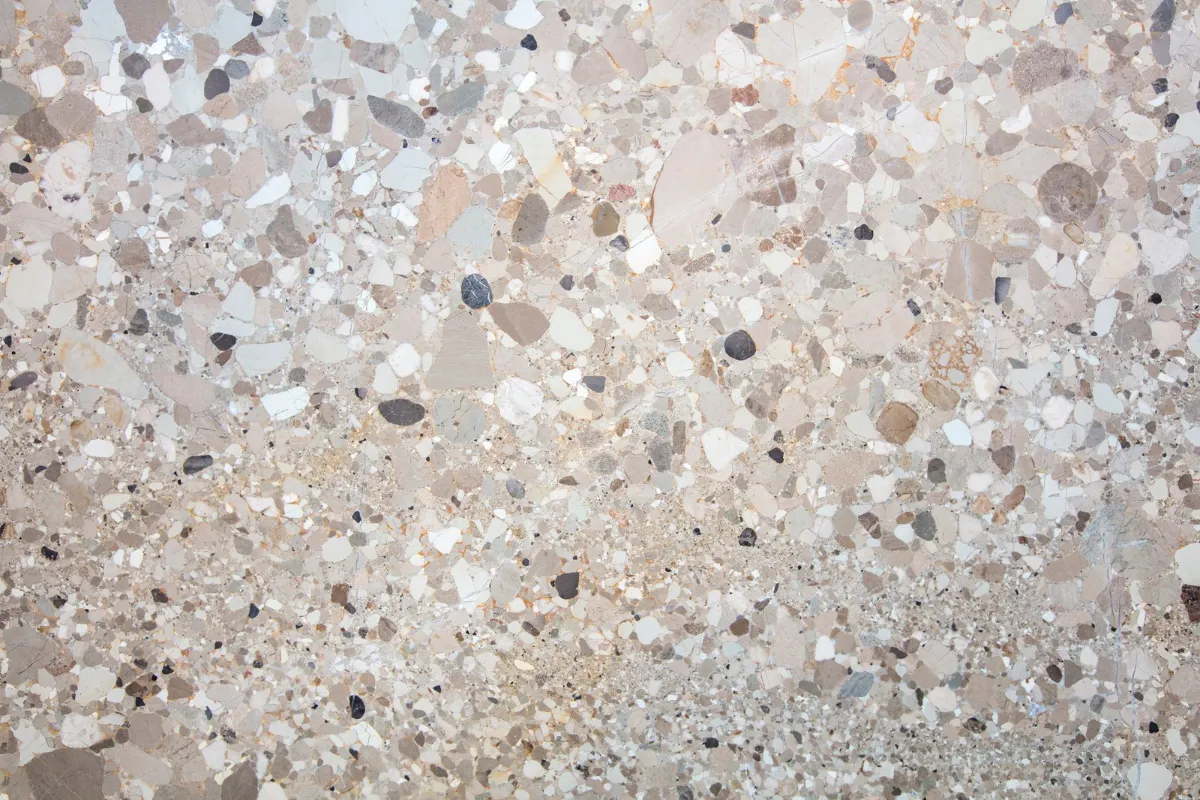 Decorative Flake FlooringRefined chip blends — granite, graphite, pearl — with a quiet, durable texture.
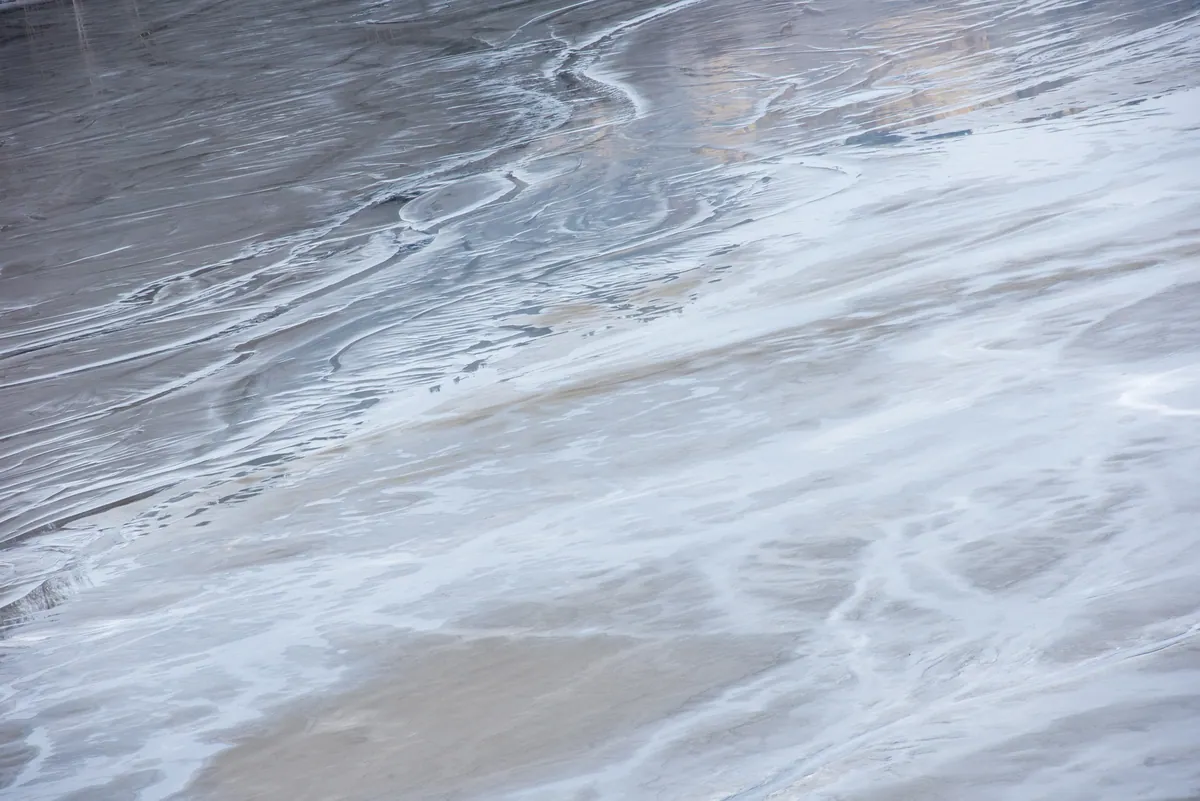 Metallic Epoxy FlooringPearlescent, stone-like floors with depth and movement, finished by hand.
Consultation
Ready to finish the garage properly?
We’ll review the slab, bring finish samples and prepare an itemized proposal.
Call (480) 000-0000